




TOURISM IN SARAWAK
Section outline
-
Synopsis of Course
TOURISM IN SARAWAK exposes students to the tourism scenario in state of Sarawak which covers the history of Sarawak tourism while instilling a sense of appreciation and pride towards Malaysia and the importance of sustainable tourism in managing tourist destination in Malaysia. Students’ depth of knowledge and understanding of Sarawak will leave a significant and positive impact to the tourism industry in Malaysia and also exposed to the various tourism products and attractions available as well as not forgetting the demands and existing supply.
Who this course is for?- Anyone who is looking to explore more about the Sarawak tourism aspect.
- Students enrolled in courses related to tourism
What you'll learn?
- Learning on Sarawak historical and tourism destination spot.
- Get information on each division in Sarawak
-
Learning Outcome:
- Understanding about history of Sarawak and information of each division in Sarawak
-
HISTORY OF SARAWAK

Sarawak, also known as 'The Land of Hornbills' is situated northwest on the wild island of Borneo. Strong primeval forces and tribal traditions still resonates in every corner of Sarawak, from longhouses to the majestic highlands, from nostalgic city alley-ways to vibrant rivers that runs through the lavish splurge of rainforest canopies, it is a refuge for wildlife and home to 27 ethnic groups each with its own language and culture.
This third largest island in the world is seeped in old-world charm. Vast cave networks, limestone needles and stunning pinnacles of the Mulu National Park, the vast expanse of virgin rainforests in the Bako National Park, buildings dating back to the days of White Rajahs in a city of native allure and colonial charm, Kuching. Sarawak endowed with the world's richest and most diverse ecosystem.
ITS ALL ABOUT SARAWAK !
INTRODUCTION VIDEO OF SARAWAK THE UNTOLD STORY
-
-
Students mustMark as done
E-NOTES
INTRODUCTION OF SARAWAK TOURISM
PLEASE SCAN THE QR CODE BELOW FOR VIEWING E-NOTES


-
History of Sarawak Forum
-
-
Sarawak is presently divided into 11 administrative divisions - Kuching, Sri Aman, Sibu, Miri, Limbang, Sarikei, Kapit, Kota Samarahan, Bintulu, Mukah and Betong. Kuching is the seat of government for modern Sarawak and is home to some 458,300 people making it the highest populated city in Sarawak (25 percent of the population is in Kucing) and the 7th highest populated city in Malaysia. Sarawak has a Chief Minister, which heads a Cabinet of Ministers.
The Chief Minister is appointed by the Yang di-Pertuan Negeri (or Governor), from amongst members of the State's Legislative Council. Elections are held every five years. The present Chief Minister is YAB Pehin Sri Datuk Patinggi Tan Sri (Dr) Haji Abdul Taib Mahmud. Kuching is also where the Head of the State of Sarawak, the Yang di-Pertua Negeri (Governor) His Excellency Tun Abang Muhammad Salahuddin Abang Barieng resides.
DIVISION IN SARAWAK
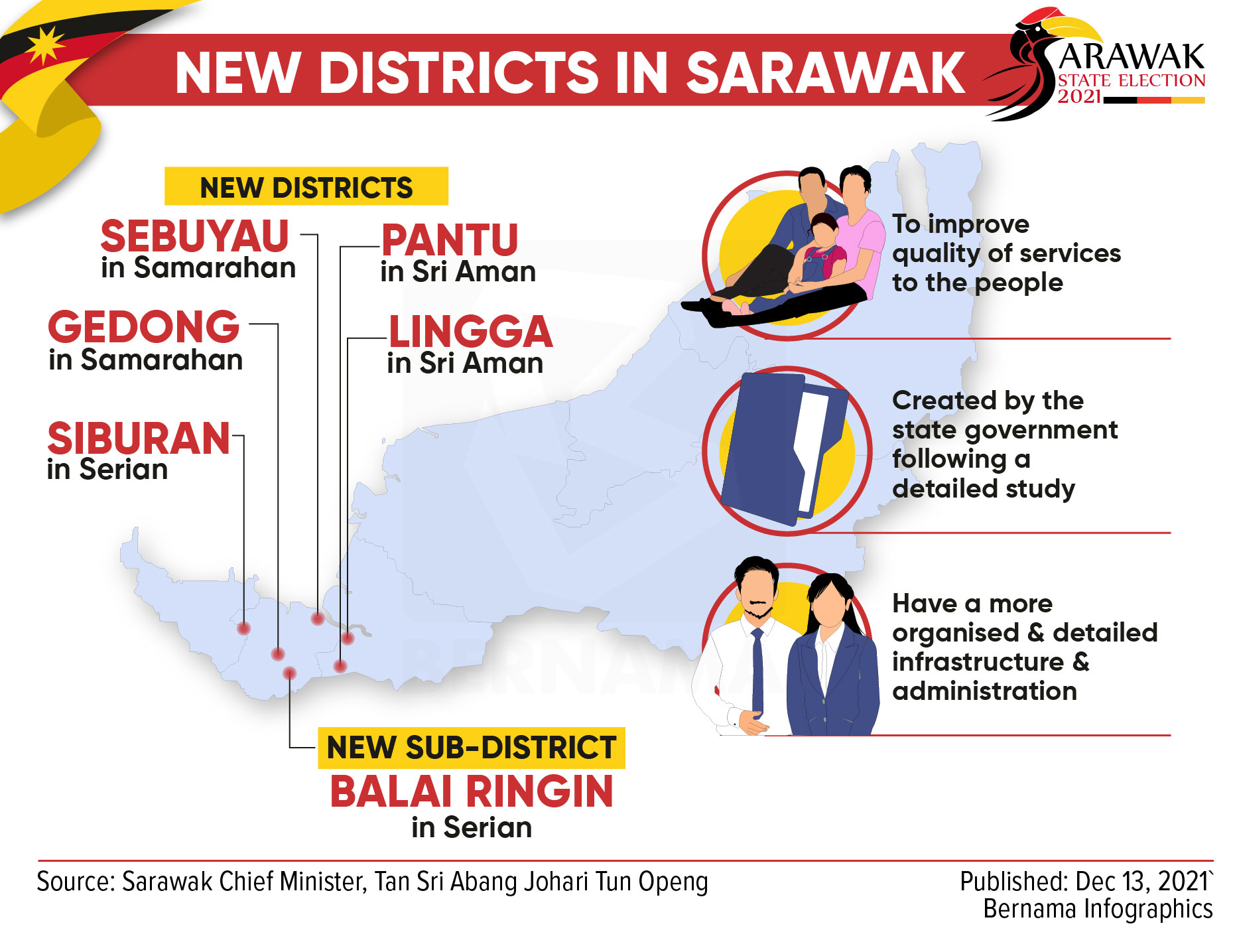
NEW DISTRICT IN SARAWAK IN 2021
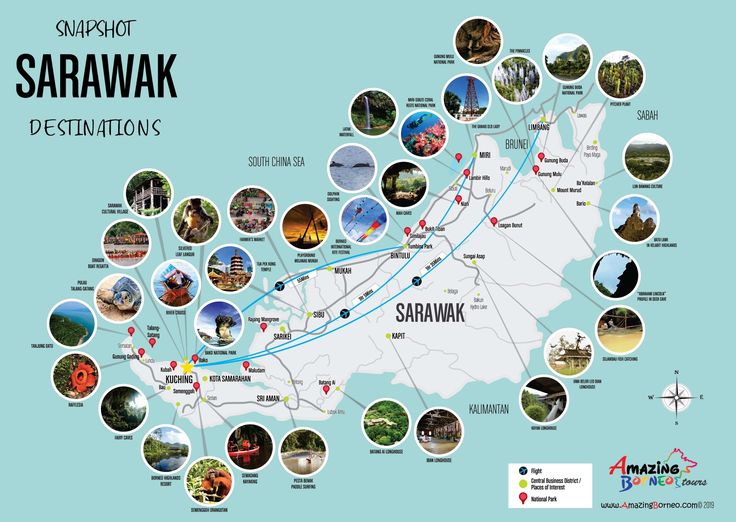
SARAWAK DISTRICT
-
-
Students mustMark as done
E-NOTES
- E-NOTES OF INTRODUCTION OF SARAWAK TOURISM
PLEASE SCAN THE QR CODE BELOW FOR VIEWING E-NOTES


-
-
Learning Outcome:
- Understanding regarding people and cultures in Sarawak
-
Students mustMark as done
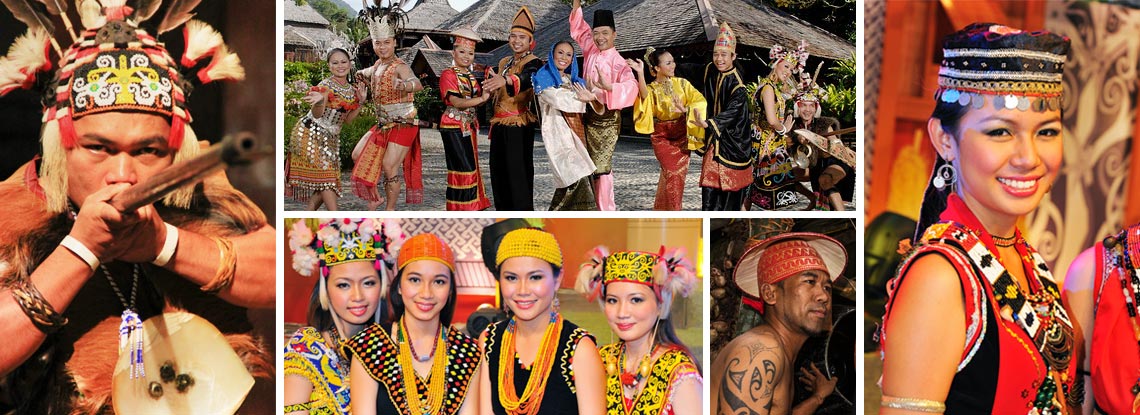
The Land of Hornbills grants you with an experience like no other, seeped in culture and natural wonders. It is buzzing with culture diversity, rich history, mighty rivers, ancient rainforests and wildlife wonders. If you're keen on nature and adventure,
Sarawak has to offer a wilderness that is grand and truly awesome. Get connected with its people, the folklore that envelopes the land with enchantment. From the unassuming charms of historic Kuching, to exploring the massive cave systems of Mulu National Park, jungle trekking and wildlife watching through Bako, experiencing the longhouse lifestyle, walk into the timeless historical pieces and understand the foundation that was set in place to make Sarawak what it is today.
-
Students mustMark as done
E-NOTES
- E-NOTES OF SARAWAK PEOPLE AND CULTURES
PLEASE SCAN THE QR CODE BELOW FOR VIEWING E-NOTES


-
-
Learning Outcome:
- Analyze all the nature attractions available in Sarawak
-
Students mustMark as done
Journey to Mulu National Park & Pinnacles
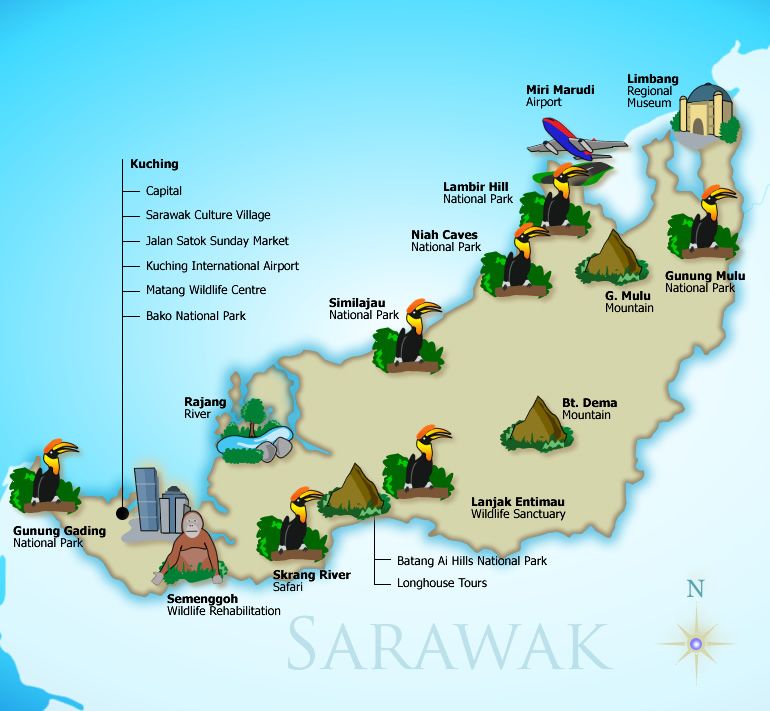
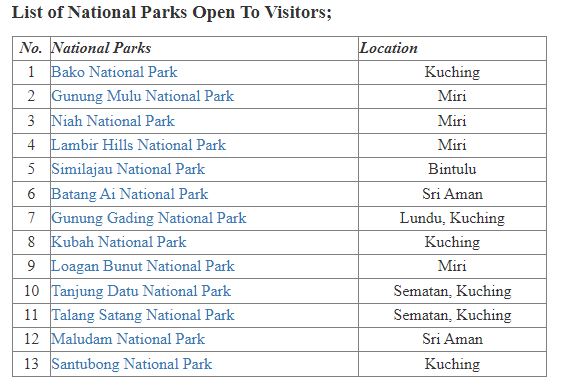
Sarawak is approximately 90% the size of the whole of Peninsula Malaysia in terms of total land area, making it the biggest region in Malaysia. Sarawak has 67 national parks, 23 which are open to the public. These include:
Unesco World Heritage Site Gunong Mulu National Park
Well known today for its rich biodiversity and karst features like its caves and underground rivers, it boasts remarkable 50-meter tall, razorsharp limestone Pinnacles on the northern end of Gunung Api and the biggest underground cave chamber in the world - the Sarawak Chamber - which can fit 40 Boeing 757 aircrafts.
Niah National Park, Borneo’s ‘Cradle of Life’
Niah Caves system boasts one of the largest limestone caves in the world which includes paleolithic and Neolithic burial sites, ancient cave paintings and the majestic Great Cave, an important prehistorical site where new discoveries in 2017 suggest that human pre-history has been established to have existed here about 65,000 years ago.
-
Students mustMark as done
List of National Park in Sarawak
-
-
Students mustMark as done
E-NOTES
- E-NOTES OF SARAWAK NATURE ATTRACTIONS
PLEASE SCAN THE QR CODE BELOW FOR VIEWING E-NOTES


-
-
Students mustMark as done
Given that tourism is a combination of activities, services, and industries that provide a travel experience, it is critical to identify and classify its supply components. The quantity and quality of these determine the success of tourism in any area.
There are four main types of tourism supply components.
- Natural resources and environment
- Build Environment
- Operating Sectors:
- Spirit of hospitality and cultural resources
Economists define demand as a schedule of the amount of any product or service that people are willing and able to buy at each specific price in a set of possible prices during some specified period of time. More precisely, the desire to travel to a certain place is an of the individual's propensity to travel and the resistance of the connection between the places of origin and the destination.
-
Students mustMark as done
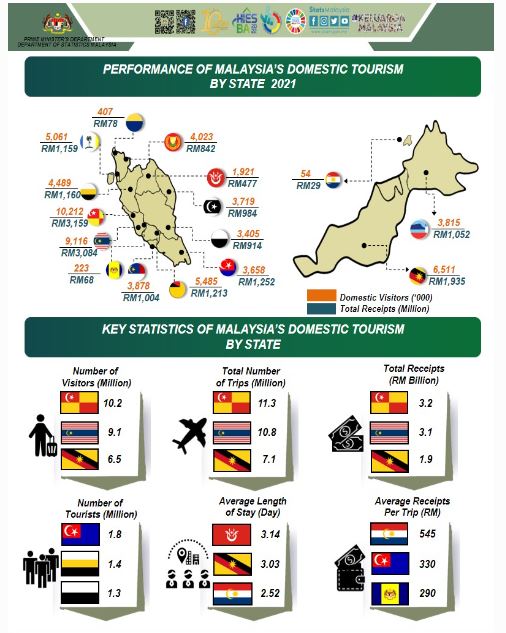
Performance of Domestic Tourism By State, 2021
-
Students mustMark as done
E-NOTES
- E-NOTES OF SARAWAK TOURISM DEMAND AND SUPPORT
PLEASE SCAN THE QR CODE BELOW FOR VIEWING E-NOTES


-
-
-
Students mustMark as done
ASESSEMENT
PLEASE SCAN THE QR CODE BELOW FOR ANSWERING ALL THE ASSESSMENT GIVEN


-
-
-