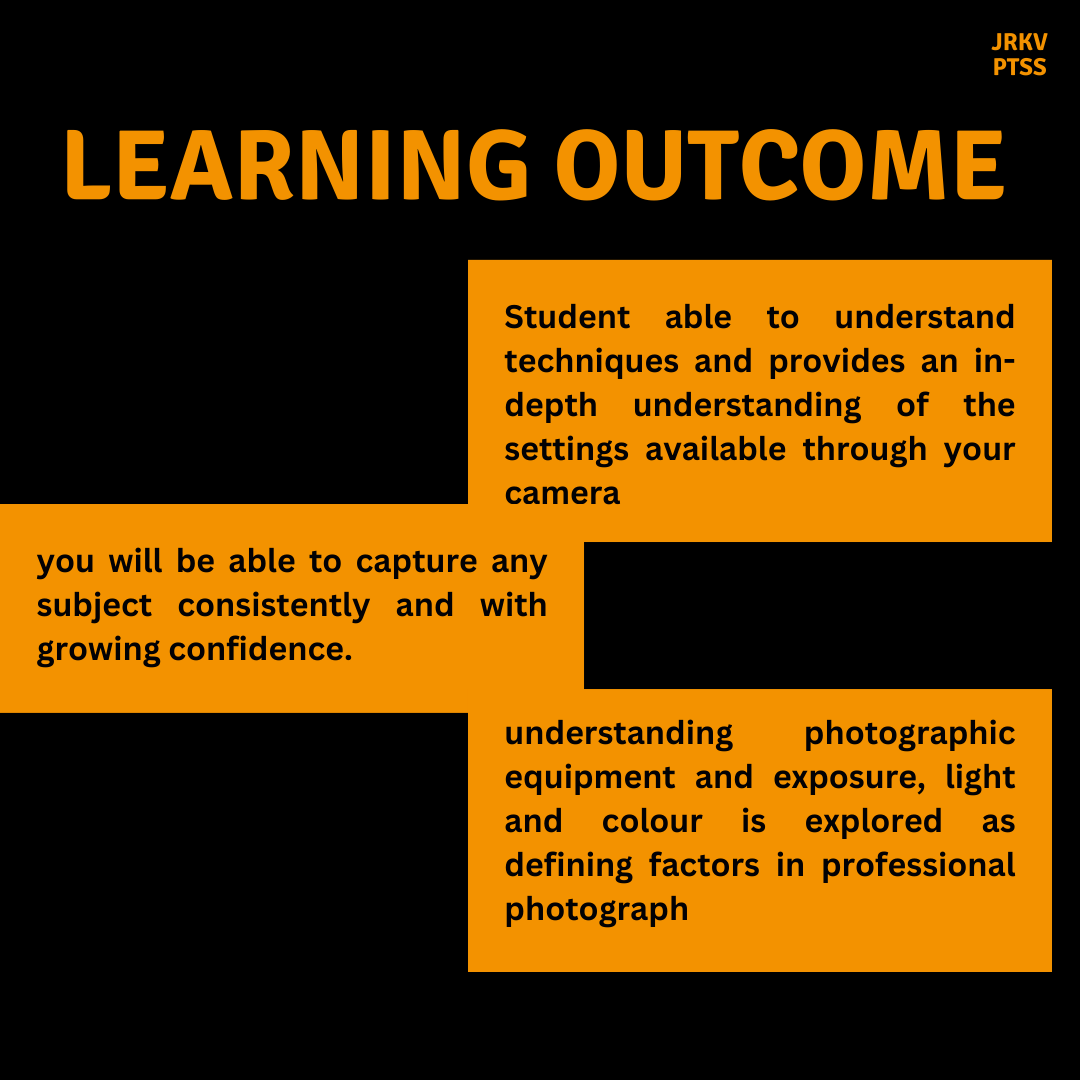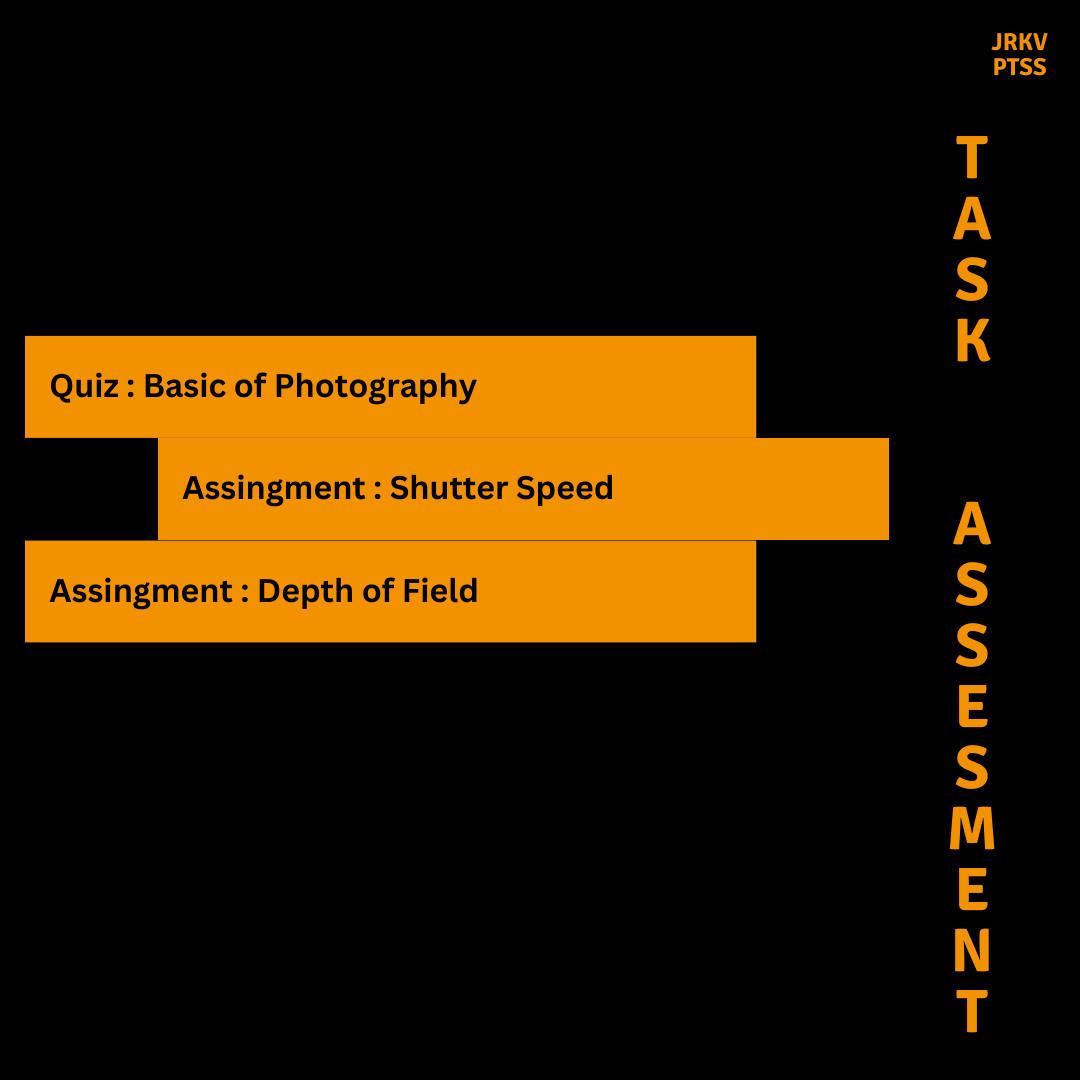




Understanding Basic Photography
Section outline
-
-
Students mustMark as done

Class will start at
least have minimal 5 participant,Class not restricted to candidate that don't have Camera, at minimal student at least must have digital a camera.
All of activity must be completed for receiving digital certificate
-
Students mustMark as done
All student must participate in group discussion by every end of chapter
*ICE-BREAK NEW STUDENT NEED TO PROPERLY INTRODUCE YOURSELF
- NAME
- AGE
- PURPOSE ENTERING THIS COUSE
-
Students mustMark as done

-
Students mustMark as done
-
Students mustMark as done

-
Students mustMark as done
-
Students mustMark as done
-
-
The enhancement of digital photography has brought about a significant change in the methods of capturing images. As a result, it is now much more straightforward to shoot high-standard-quality photographs than directly publish them through online platforms. It is necessary to have a solid understanding of the fundamentals of photography. Still, if one wishes to master the art of digital photography fully, one will need to delve further into expanding their knowledge and expertise even more.
-
Composition is crucial to photography's aesthetics and impact. A well-composed photograph may convey a narrative, evoke powerful emotions, and capture attention. Several compositional tactics in photography achieve this.
- The rule of thirds
- Balance
- Leading lines
- Framing
- Perspective
-
A light source impacts everything in photography, including the character, separation, colors, textures, mood and the story of the photo. When it comes to photography, the type of lighting is the most crucial element in the composition of any image. Light in photography refers to how the light source, natural or artificial, relates to the subject.
The position and quality of light can affect any number of things in the final image, from clarity to tone, emotion, and so much more, by paying attention to how light plays off the angles and curves of your subject and which parts of the subject are illuminated and which are in darkness.
Whether shooting portrait or landscape photography, lighting choices will depend on the features of the subject and how the photographer wants them to be portrayed in photos. For example, hard light is more severe and will emphasize angles and any surface that is not perfectly flat, like the waves at a beach, whilst soft light will always smooth over these features. Understanding how to use natural and artificial lighting in every situation will be a huge step forward in your journey to improving and producing the best possible images. -
Thank you for taking this photography journey with me! Throughout this course, we've explored various aspects of photography, from understanding different types of cameras to learning about composition and lighting techniques. Now, let's take a moment to reflect on what we've covered and the knowledge you've gained.
Throughout this course, we've provided you with tips, tricks, and recommendations to improve your photography skills. We encouraged you to practice regularly, experiment, and learn from your mistakes. Remember, photography is an art form that requires patience and dedication
Thank you once again for joining me in this exploration of photography. I hope you've enjoyed this course as much as I have enjoyed creating it. Keep practicing, keep experimenting, and never stop capturing the beauty of the world around you. Happy shooting!REFERENCE
Carlton book (2016), PRACTICAL PHOTOGRAPHY DIGITAL CAMERA SCHOOL, Publish by Carlton Book Limited 20 Mortimer Street London, ISBN 978-1-78097-881-9
David Präkel (2010), THE FUNDAMENTALS OF CREATIVE PHOTOGRAPHY, Published by AVA Publishing SA 2010 Switzerland, ISBN 978-2-940411-13-9
Ian Farrel (2011), COMPLETE GUIDE TO DIGITAL PHOTOGRAPHY Quercus Publishing PLC, ISBN 978-0-85738-5482
Tabitha Dell’Angelo, Louise Ammentorp, and Lauren Madden (2017), USING PHOTOGRAPHY AND OTHER ARTS-BASED METHOD WITH ENGLISH LANGUAGE LEARNER, ANSI/NISO Z39,48-1992