




Lesson
Metal Halide Lamps
Completion requirements
View
Go through the activity to the end
Receive a grade
DEFINITION
Hello everyone! Now, we will explore another type of high-intensity discharge lamp — the Metal Halide Lamp. This type of lamp is known for producing very bright light and is used in large spaces like stadiums, factories, and commercial areas.
1. What is a Metal Halide Lamp?
A metal halide lamp is a type of HID (High-Intensity Discharge) lamp. It produces light by passing an electric arc through a mixture of gases, including mercury vapor and metal halide compounds inside a quartz or ceramic arc tube.
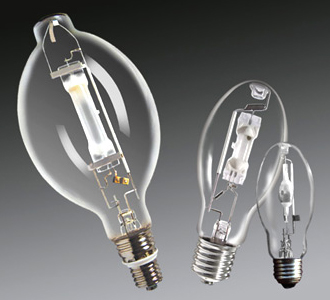
2. How Does It Work?
When the lamp is turned on:
-
An electric arc forms between two electrodes inside the arc tube.
-
The arc heats up the gases, including mercury and metal halides.
-
The metal halide salts vaporize and release intense white light as the atoms get excited.
-
A ballast is used to control the voltage and current.
Metal halide lamps need a warm-up period, usually 2–5 minutes, to reach full brightness.
3. Components of a Metal Halide Lamp
-
Outer Bulb – protects the arc tube and provides UV shielding
-
Arc Tube – contains the gases and electrodes
-
Metal Halide Salts – improve efficiency and color rendering
-
Ballast – regulates electrical flow
-
Ignitor – helps start the arc
4. Advantages of Metal Halide Lamps
-
High luminous efficiency (more lumens per watt)
-
Bright, intense light suitable for large spaces
-
Good color rendering index (CRI) — colors appear natural
-
Longer lifespan compared to incandescent or halogen lamps (6,000–20,000 hours)
5. Disadvantages
-
Longer warm-up and re-strike time
-
Sensitive to position and temperature
-
Contain mercury and require careful disposal
-
Not as energy-efficient as LEDs
-
Can degrade over time (color shift and reduced output)
6. Typical Applications
You can find metal halide lamps in places that require powerful and consistent lighting, such as:
-
Sports stadiums and arenas
-
Factories and warehouses
-
Car parks and street lighting
-
High-ceiling commercial areas
-
Outdoor floodlights
7. Quick Review Questions
Let’s test your understanding with a few questions:
-
What gases are used in a metal halide lamp?
-
Why does it need a ballast?
-
What makes metal halide lamps brighter than mercury vapor lamps?

Summary
To summarize, metal halide lamps are powerful light sources that produce bright, white light using a mixture of gases. While they offer excellent brightness and color rendering, they are gradually being replaced by more efficient and environmentally friendly technologies, like LEDs.