



Feeds and Feeding In Aquaculture
Section outline
-
-
Lets introduce your self Chat
Indtroduce yourself here
-
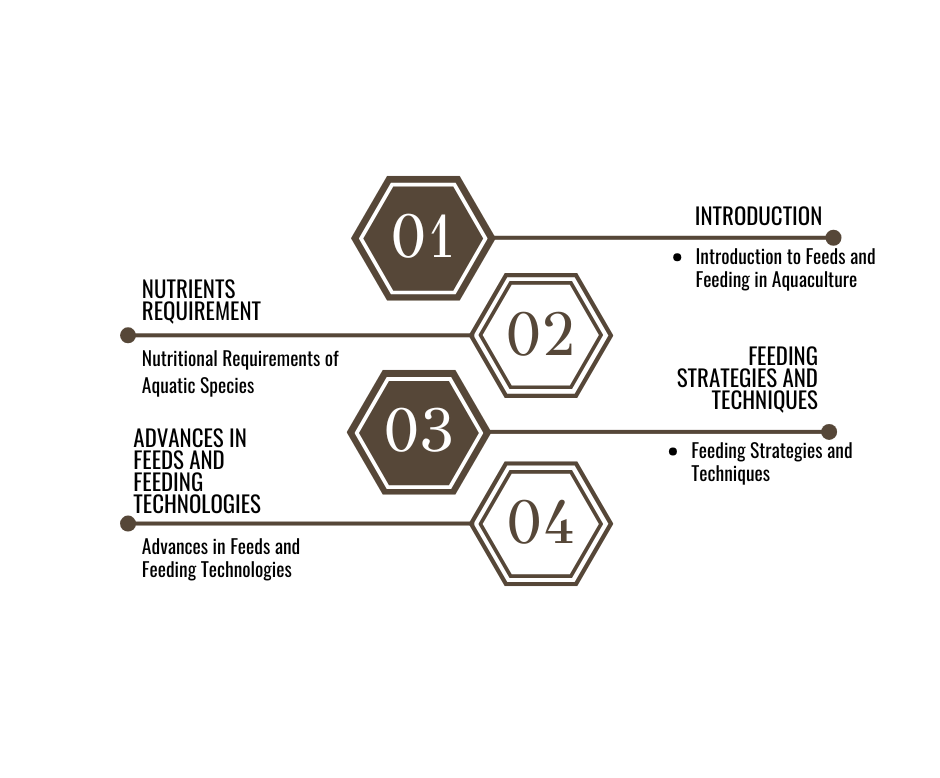
Feeding is one of the most critical aspects of aquaculture as it directly impacts the growth, health, and profitability of the farming operation. In natural settings, aquatic organisms depend on naturally available food sources like plankton, algae, and detritus. However, in controlled aquaculture systems, these sources are often insufficient, necessitating the use of formulated feeds. Proper feeding ensures not only high productivity but also sustainability by reducing feed waste and environmental impact. This chapter sets the foundation by discussing the importance of feed in aquaculture and the evolution of feed practices over time.
Types of feeds
Aquaculture feeds can be broadly classified into natural feeds and artificial feeds.
- Natural Feeds include plankton, detritus, and aquatic plants, which are primarily used during the early stages of farming or in extensive systems.
- Artificial Feeds, like pelleted and extruded feeds, are designed to provide a balanced diet tailored to specific species and growth stages. This chapter explains the different feed forms such as floating pellets (extruded feeds), sinking pellets, and powdered feeds, along with their specific uses. It also discusses factors influencing feed selection, such as species type, feeding habits, and farm objectives.
-
Feeds and feeding video Video Time
-
NOTES File

-
-
Aquatic organisms have diverse nutritional needs based on their species and life stages. This chapter highlights the essential nutrients required for optimal growth and health:
- Proteins are vital for tissue development and repair. Carnivorous species require higher protein content, while herbivores need less.
- Lipids (Fats) provide energy and essential fatty acids necessary for growth and reproduction.
- Carbohydrates are an energy source, though less digestible for carnivorous fish.
- Vitamins and Minerals are needed in small amounts but play significant roles in metabolism, immunity, and skeletal development.
This chapter also discusses the consequences of nutritional imbalances and methods to formulate species-specific diets.
-
nutrient Video Time
-
Nutritional Requirements of Aquatic Species File

-
Students mustView
 Discuss any other feed characteristic that you think important
 -
Assesment Lesson
-
Efficient feeding strategies are essential to maximize feed utilization and minimize wastage. This chapter introduces various feeding methods:
- Manual Feeding allows observation of fish behavior but is labor-intensive.
- Automatic Feeders and demand feeders provide consistent feeding, reducing labor and improving efficiency.
- Broadcast Feeding is commonly used in ponds but can lead to feed wastage if not carefully managed.
It also explores feeding frequency, ration sizes, and the importance of adjusting feeding practices based on water temperature, fish size, and environmental conditions.
-
Feeding strategies Video Time
-
Feeding Strategies and Techniques File

-
Advances in Feeds and Feeding Technologies
Innovation is transforming aquaculture feeding practices. This chapter highlights emerging trends:
- Probiotics and Prebiotics: Improve gut health and disease resistance.
- Biofloc Systems: Promote microbial communities as natural protein-rich feed.
- Precision Feeding: Utilizes AI, sensors, and automated feeders to optimize feeding schedules and reduce waste.
- Insect-Based Feeds: A sustainable and cost-effective alternative to fishmeal.
These advancements are not only improving production efficiency but also making aquaculture more sustainable and eco-friendly.
-
In summary, the importance of feed and feeding in aquaculture extends beyond simple nutrition; it encompasses economic, environmental, and social dimensions. Sustainable aquaculture practices, coupled with responsible feeding, are vital for meeting the growing demand for seafood while minimizing the industry's impact on the environment.
RUJUKAN
Abdullah, A. H. (2004). Hubungan berat-panjang, faktor keadaan dan analisis kandungan perut bagi ikan cyprinidae, propuntius smedleyi di hutan Lipur Sekayu dan Hutan Lipur Chemerong.
Hasan, M. R., & Halwart, M. (2009). Fish and feed inputs for aquaculture. Practices, sustainability and implications., FAO Fisheries and aquaculture technical paper, (518).
Huntington, T. C., & Hasan, M. R. (2009). Fish as feed inputs for aquaculture–practices, sustainability and implications: a global synthesis. FAO Fisheries and Aquaculture Technical Paper, 518, 1-61.
Tacon, A. G., Hasan, M. R., & Metian, M. (2011). Demand and supply of feed ingredients for farmed fish and crustaceans: trends and prospects. FAO Fisheries and Aquaculture technical paper, (564), I. -